
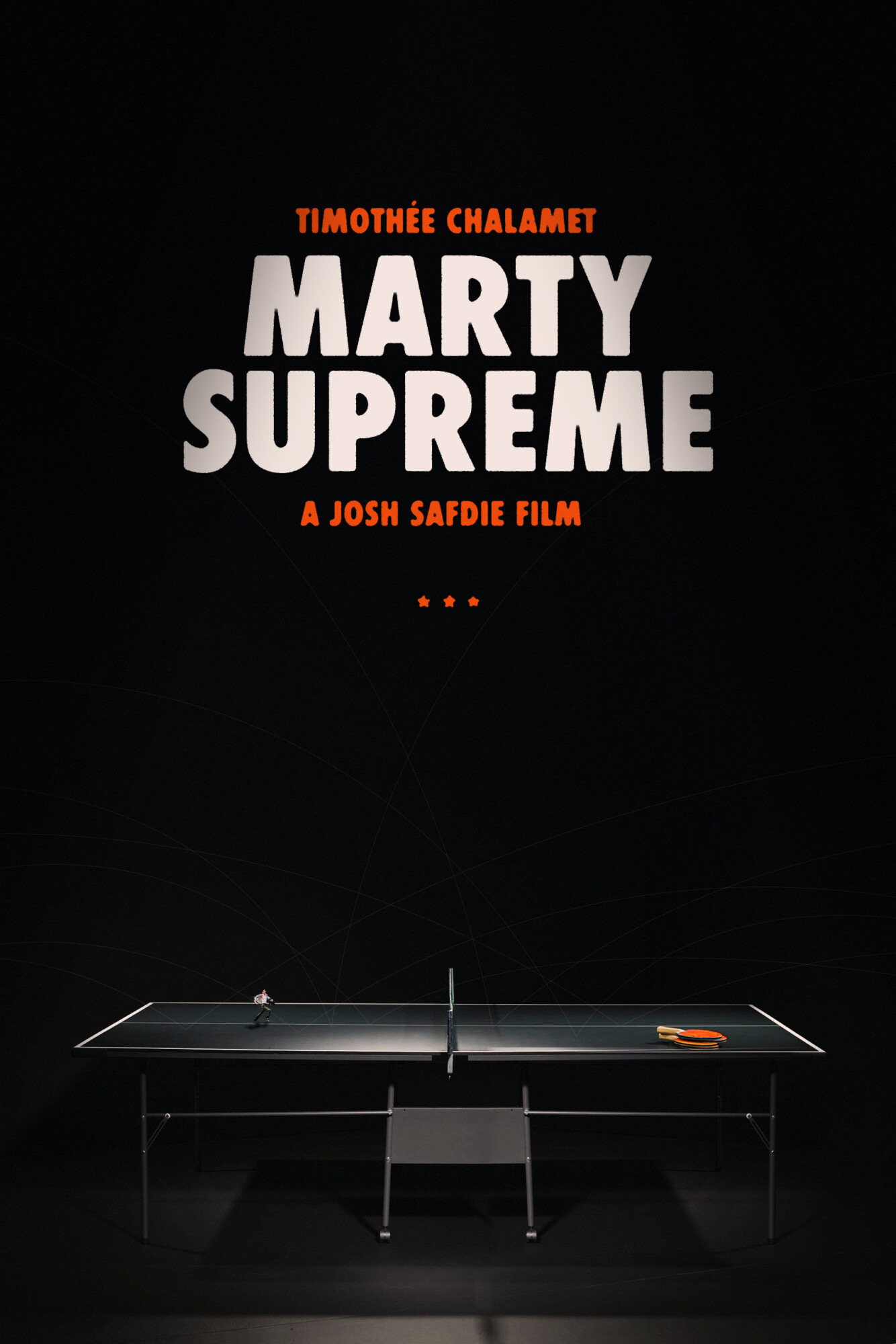
Marty Supreme
This is what you want, this is what you get.

Now, let’s get back to the movies. Scandalous as it is, I got a copy of this Safdie film starring Timothée Chalamet. I’ve been avoiding this one, as I find the awards campaign quite off-putting and the lobbying that this actor has done certainly deserves a clap or two. It may all be in vain considering the horrible own goal he scored this week. But I digress.
Wow, what a film!
It is a film about many things, and on the surface, it is about a bum and a grifter called Marty Mauser, a young New Yorker trying to make it big in the world of ping pong. Yes, it is a ping pong film, and the lengths this fella will go to get on a trip to Japan and play a world champion that looks a bit like one Hidetoshi Nakata.
Aside from this mission, this Marty character is sexing a married childhood friend, whom he gets pregnant and denies the paternity of the baby until the very last scene; he ruins all his friendships, cons an injured man who needs to get his dog to the vet, sleeps with a married film star and badgers her husband to sponsor him a ticket. It gets worse, as I struggled to find a single morsel of redeemability in this character. But here’s where it gets layered – Marty Mauser is not your average cartoon villain; he is layered with the rawness of a post-WWII Jewish striver and survivor, navigating a world still echoing with antisemitism and the ghosts of the gas chamber. His hustle isn’t only just malice; it’s laced with a desperate patriotism or self-delusion, declaring himself “Hitler’s nightmare” in interviews (pure balls), turning table tennis into a bizarre act of defiance and assimilation. Yet, that doesn’t excuse the wreckage – it complicates it, forcing us to question if his ego is a mask, a shield, or a sword.
Part of what made this film so captivating is how this repugnant character can keep on keeping on, bullshitting himself and others into thinking that he’s one step ahead, that the world is just utterly ridiculous for not seeing his greatness. Sincerely, only a white man can have such unwavering self-belief into thinking that the world is his and that he possesses a giant cock to fuck it with.
To balance that out, though, I’m sure the filmmaker does not endorse this character’s narcissism; there is a clear dissection in showing us ambition in 1950s America, especially for a Jewish kid from the streets, themes of postwar guilt, vengeance, and the seductive pull of the American Dream that promises glory but delivers nothing but isolation and emptiness.
It is the embedded American dream that is sewn into the fabric of capitalist society, to trounce and obliterate others and leave dust and degradation in their wake, in search of a fortune that is rightfully yours, while being enabled in the process. It is the delusional right that turns men into extractivist monsters without replenishing the very ground that nourishes them. This inconsequential character represents all that America is, leaving devastation in its wake, to win at all costs, even if the game is merely an exhibition match, which Marty Mauser travels to Japan for.
On the flip side, the film’s moral ambiguity leaves room for interpretation. Is Marty a cautionary monster, or a mirror to the era’s unchecked ego? Some see his final moments as redemption, where sacrifice and obligation collide, hinting that his “purpose” might be as much a curse as a drive. It’s not finger-wagging; there are no easy lessons, but instead letting the chaos speak for itself, which adds to the intellectual punch without diluting the mess.
It is a captivating film, frantic as only a Safdie (who made the equally nauseating Uncut Gems with his brother and Adam Sandler) can muster. The ’50s setting felt a bit negligible, perhaps that is the mastery of production designer Jack Fisk and the decision to keep the camera in tight shots and show us dimly lit ping pong tables and apartment corridors. It isn’t pretty, it’s not meant to be, and that is its allure. Yet, academically, that aesthetic choice amplifies the film’s interior claustrophobia – the tight frames trap us in Marty’s headspace, showing how his worldview shrinks everything to his own supremacy, while subtly nodding to the era’s social constraints on identity and class.
The acting is loud, brash and helped by a wonderfully polished script. If anyone needs to take lessons on writing dialogue, listen to how these characters speak; every word is intentional, it moves the story and the plot forward and reveals something about these despicable people. It makes the acting look better than it is. Chalamet banishes self-doubt, channeling a charisma that makes Marty human amid the scars and ego. It’s a performance that embodies the character’s nightmare, blending comedy with calamity in a way that echoes the director’s previous film.
I believe that most films deserve a second look. I will certainly revisit this one soon as I was quite perplexed and horrified at what I was watching. I was captivated and I marveled at every scene and its perfect construction.
I am glad I don’t live in that world and that I possess a different code of living to some. Not rightly or wrongly, but I am certain that if I lived in the world of this story, I certainly would not have the balls or bowels to survive it. Perhaps it is a cautionary tale about the price we pay in the search for glory and what we lose in the process. If we care at all. Or maybe it’s more – a frenetic exploration of legacy-building in a void, where winning exposes the emptiness of the pursuit, leaving us with conflicting emotions about whether triumph is poetic justice or just another con.
I sincerely wonder what the writer-director intended with this film, but I suspect that he succeeded beyond his own wild and vivid imagination.
The part that will stay with me is your description of Marty Mauser as someone with 'not a single morsel of redeemability' who somehow keeps the audience watching. That is the difficult trick, isn't it? To make a repugnant character captivating without asking us to forgive him. You point to the layered performance, the intentional dialogue, the tight frames that trap us in his headspace. But I keep returning to your observation that Marty's hustle is 'laced with a desperate patriotism or self-delusion', that idea of him declaring himself 'Hitler's nightmare' as a kind of shield. It complicates things without excusing them.
The question I am left with, as someone learning to write characters who are not simply good or bad, is this: do you think the film ultimately wants us to see Marty's self-belief as a product of his time and circumstance, or as something more universal: a portrait of what ambition does to a person when the game itself is hollow? You mention the American Dream as 'sewn into the fabric of capitalist society.' But is Marty a symptom of that system, or is the system just the stage for something older and uglier in him?
Thank you for this. It made me think long after reading.